The Hero Journey Tale and The Odyssey
The Odyssey
by Homer is a classic hero journey tale. It is laid out in a particular way
that makes the theme easily identifiable. It also has different character
archetypes and all of these pieces have transferred into our current popular
culture. This story was important when it was written, but is still important
today even though thousands of years have passed. There are many ways that this
story is present in our popular culture and shapes the themes of today. Why is the hero journey tale presented
in The Odyssey still a major storytelling method and why it will continue to
be?
The hero journey tale is when the main character or hero goes through
certain stages throughout the story. These stages are the call to action where
the hero is in some way summoned to do this, refusal of the call where the hero
goes through a period of self doubt and wants to give up, getting advice from
someone else which can sometimes be a supernatural being, and success in his
quest. Some things that happen in our everyday lives are when the alarm clock
goes off in the morning, that's just like our call to action. These stages and
plot make it easy to identify its main theme. Each stage plays an important
part in helping the character develop and eventually succeed. They are usually
trying to improve their reputation or help their community. In The Odyssey, the
main character is going on a sea adventure to find his father and bring him
home to rule the kingdom. Family
legacy was very important to them and he did not want his father's name
disrespected.
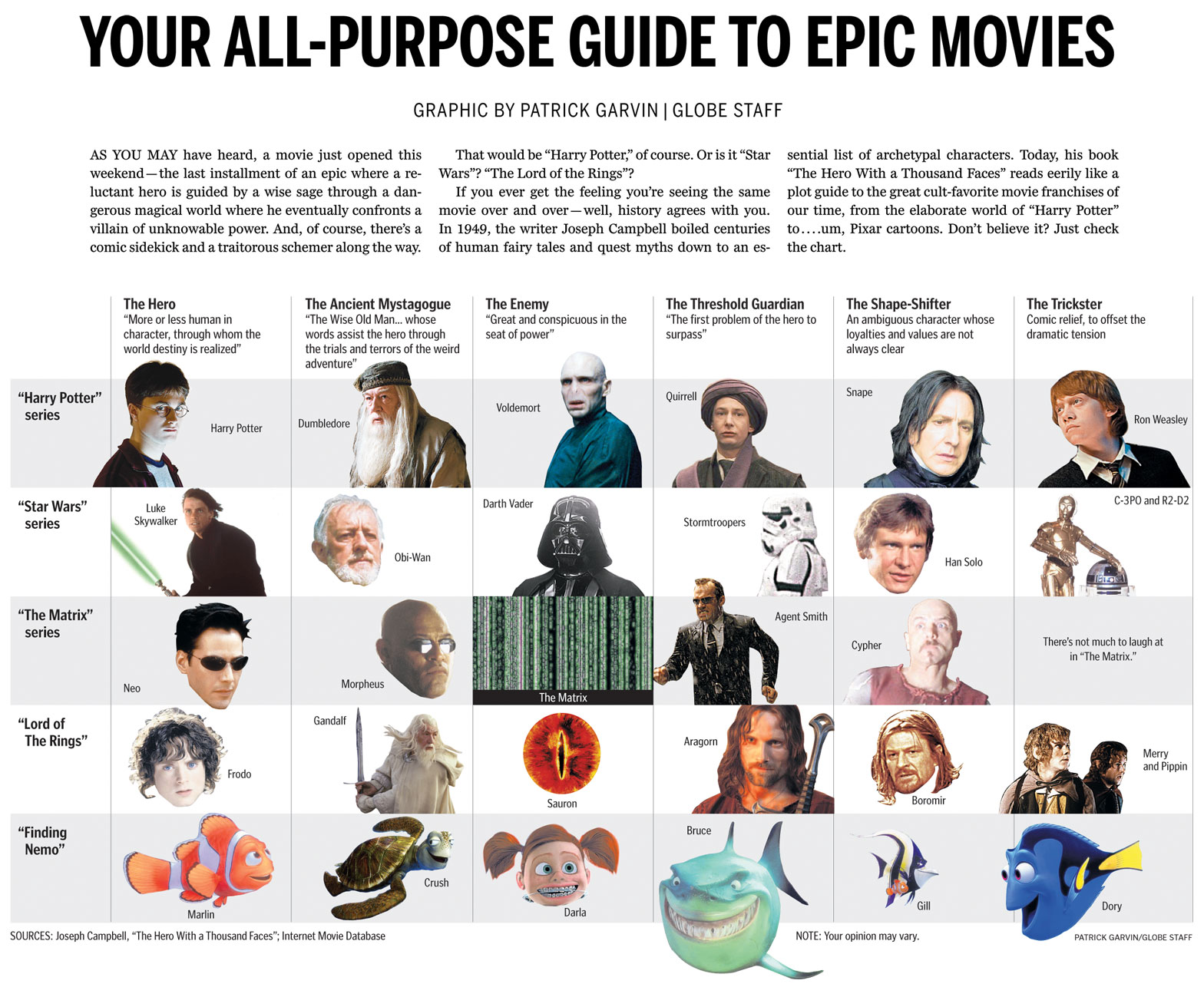
The different character archetypes also play a major role in helping the
main character to succeed. These
archetypes also come into play at certain stages in the plot, and they all affect
one another. These characters
resemble people that we can encounter in our everyday lives. Some are good and helpful, and some try
to steer you away from the right path to follow. We want to be able to identify ourselves with the hero, and
pick out the other people in our lives that resemble the different
archetypes. Some archetypes are
Odysseus who is the trickster, Telemakhos who is the hero, Calypso who is the
temptress, and Athena who is the supernatural help. Telemakhos finally gets his call to action from Athena when
she says, ”…here’s a course for you, if you agree: get a sound craft afloat
with twenty oars and go abroad for news of your lost father –- (429). This is when he realizes that he has to
take matters into his own hands in order to rid his mother of her suitors and
bring his father home. Athena
helps him to see his true potential. These archetypes are very important pieces
in the different stages that the hero must go through to reach the end of his
journey. Without these characters,
the story would not flow the same.
The
theme of a hero's journey tale is also present in some of our current popular
culture. Even though The Odyssey was written thousands of years ago, the theme
and the character archetypes still play a major role in today's society. The
Disney movie Finding Nemo is a perfect example. In this movie, the hero,
Marlin, is on a quest to find his son and bring him home. Along the way he
meets some characters that try to help him along the way, and push him a few
steps backwards. He is faced with different challenges and goes through the
same stages that Telemakhos goes through in The Odyssey. All of these pieces
make up this hero's journey to find his son.
This theme is still used today not just because it makes for a good
story, but because they are stories we can relate to. Everyone likes to see the
good guy win especially if they do not look like they are heading in that
direction. Even though The Odyssey was written thousands of years ago, the
types of struggles that the hero goes through make him relatable. We want to be able to identify our
lives with the way that the hero handles his hardships and is able to overcome
them. The hero often stands out because we do not immediately like them, or as
a type of role model because of his distinct personality traits. People like to
see the transformation from bad to good and the changes that they make.
Sometimes their negative traits can push them forward because they want to move
past that and prove themselves worthy. Even though the heroes may present
themselves in an ordinary way, they are not. They are a form of who we want to be. They rise above their
own issues and self-doubt and that is one of the reasons they are so desirable. Everyone wants to overcome all the
things that life throws at them. Sometimes some of the obstacles the hero must
overcome are even more relatable to a particular point in a person’s life. For
example, if the hero has to get physically fit for a quest, which could be like
the marathon, you are trying to build up to. If they can do it when it doesn't
look like they can, then you can do it too. People want to relate to other people and they want to
succeed. We admire their ability to overcome all of this. We also want to be
reassured in our own lives that everything we go through will be worth it in
the end and these stories prove that to be true. The characters also make for
an interesting story. We all like the twists and turns and to think of the
different ways this story could go. For example, if the hero meets this
temptress, could he be swayed to go with her? Or maybe he could stick to what
he is supposed to do? Everyone always has different ideas and endings as the
stories progress. Sometimes the story that you are watching in the movie
theaters is a hero journey tale, and you don't even know it.

No comments:
Post a Comment